

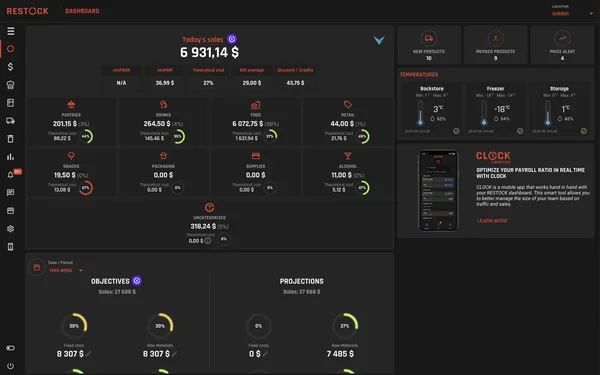
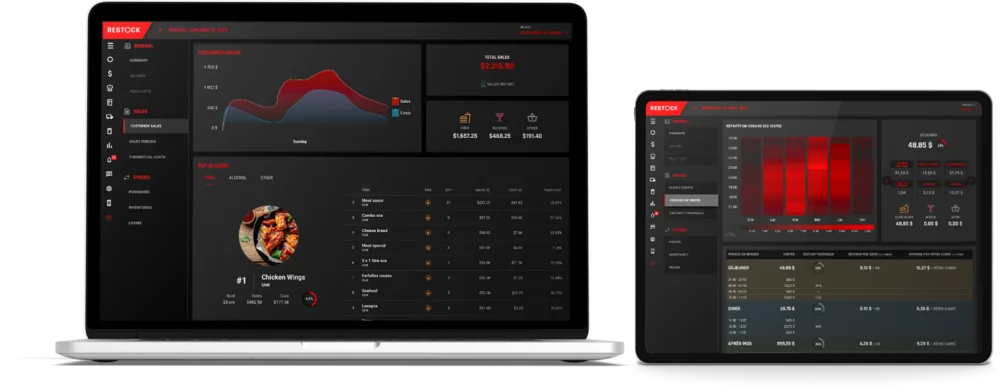
Restaurant inventory software
Walk the room once. The day is still yours.
You count the way you already walk the room (walk-in, cellar, bar), and the tablet keeps up shelf by shelf, signal or no signal. An evening's work, and nothing to type up after.
In English or in French, with a team that answers in both.
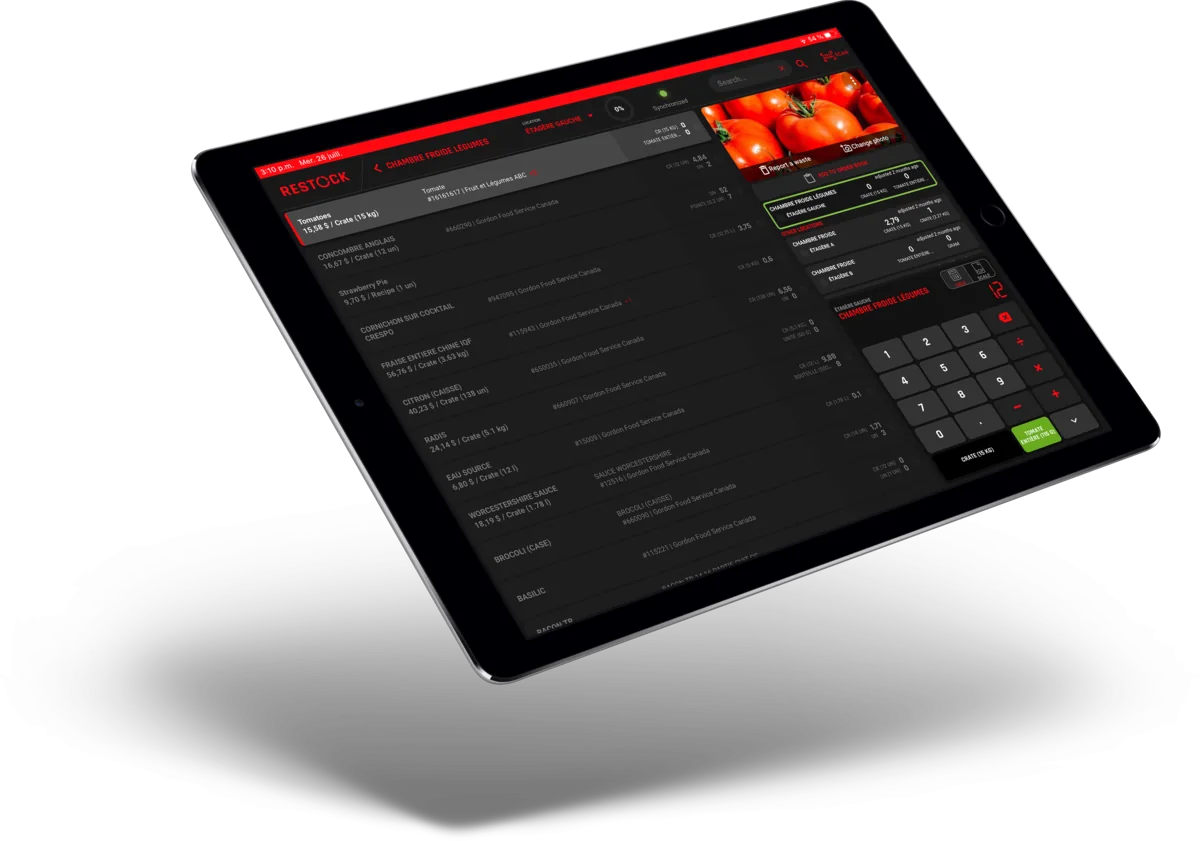
Walk-in, cellar, bar. Count the way you already walk.
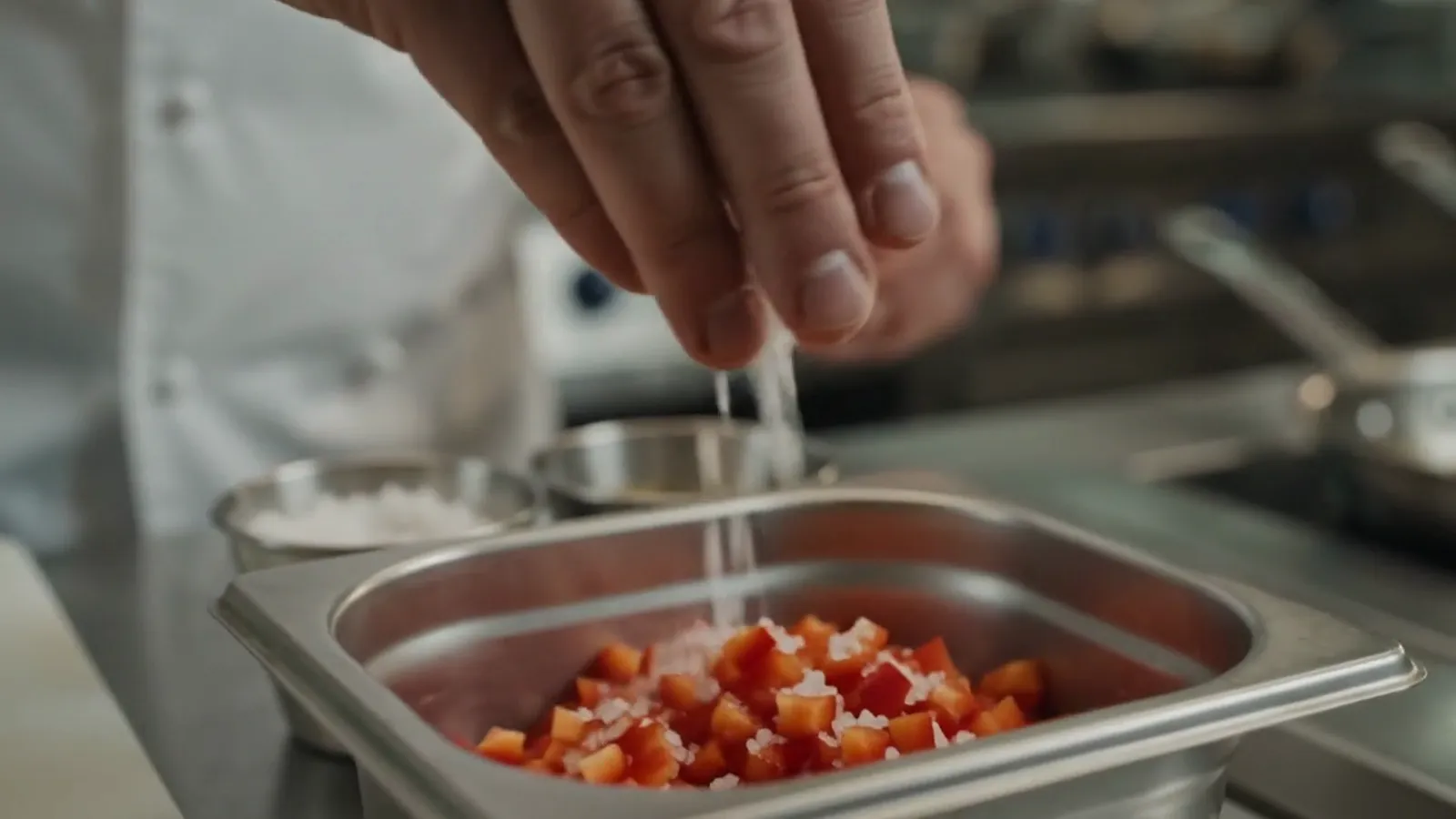
-
01
Follow the room: walk-in, cellar, bar
Your sections mirror the building (walk-in, dry storage, cellar, bar), so the tablet moves shelf by shelf with you.
-
02
Works offline, syncs after
No signal in the walk-in? Count anyway; it syncs the moment you're out.
-
03
An evening's work, not a lost day
The first one is the slowest: you're placing products into sections as you go. After that, the walk is the walk.
Every sale has been quietly depleting a theoretical shelf. Your count is the reality check.
The gap, item by item
RESTOCK lines the two up, item by item, and the difference becomes your variance: the number your food cost is built on.
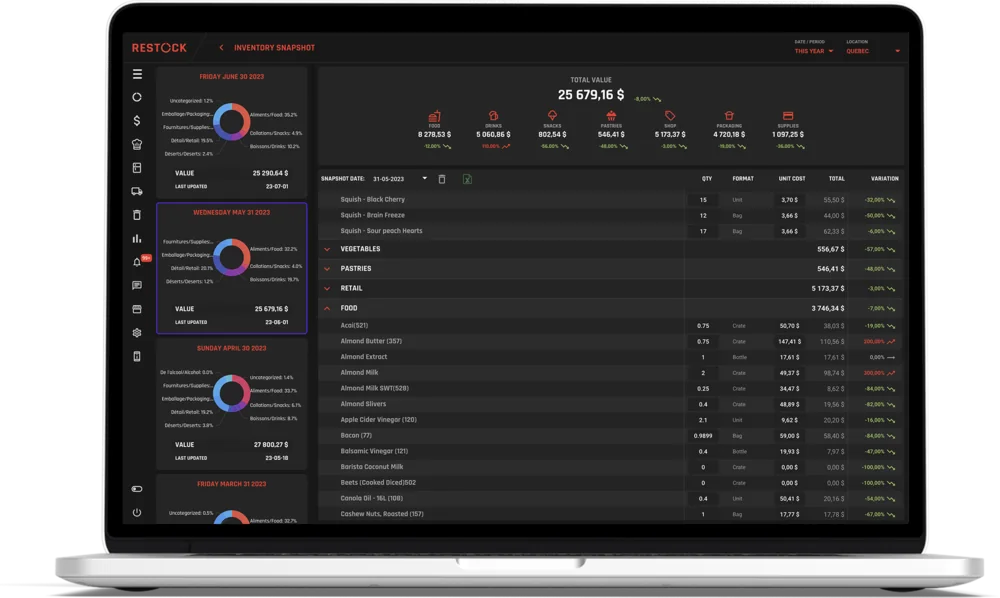
What happens between two counts
RESTOCK keeps a theoretical shelf moving with every sale and every delivery, so ordering and costing don't wait for you to count. The count is what trues it up.
A laptop can't walk into a walk-in. Hardware that does the part software can't.
In the room, not just on a screen
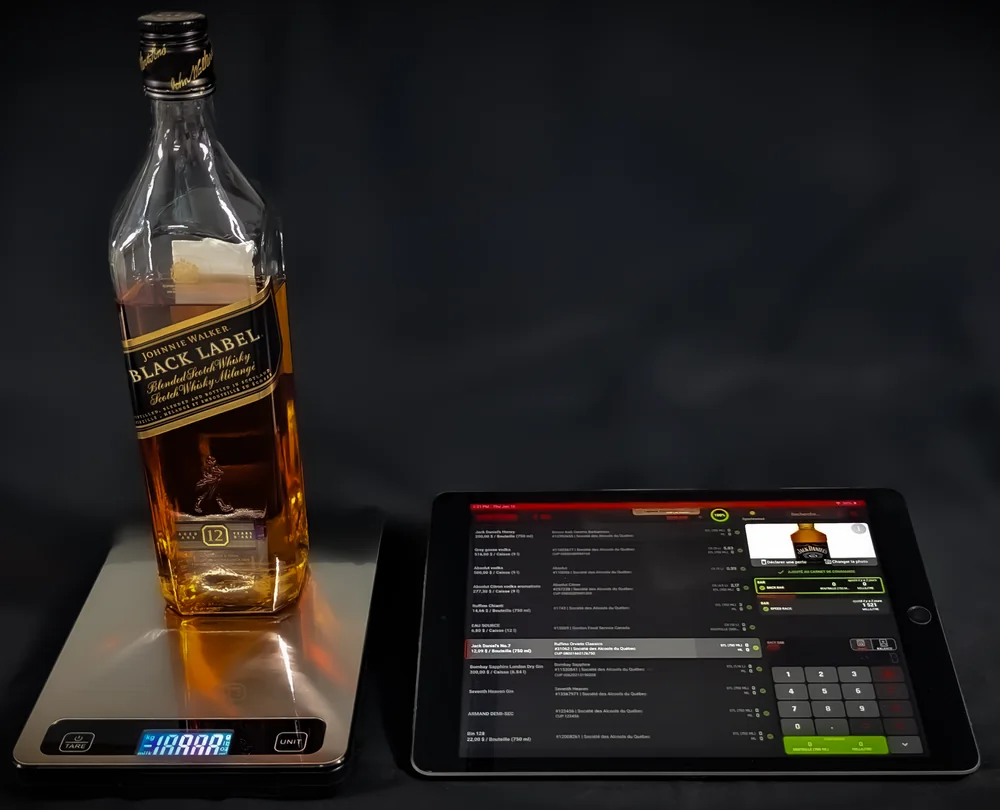
RESTOCK Scale
Weigh what's open instead of eyeballing it.
A tenth of a bottle or half a bin of greens, guessed forty times over, turns into a number nobody trusts. The scale pairs with the count, so open bottles at the bar and partial containers in the walk-in go in by weight, and the cost you report is one you'd defend to your accountant.
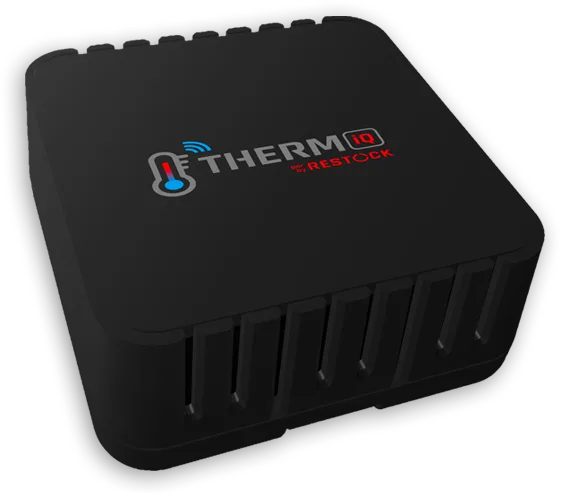
Therm-iQ
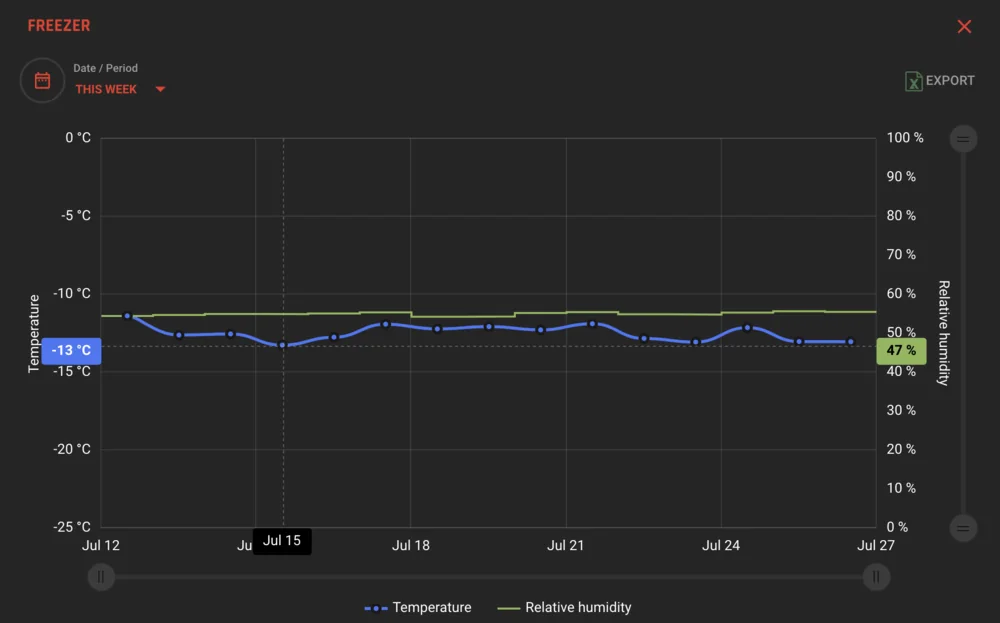
Find out the walk-in is failing before the food does.
A cooler that drifts overnight costs you the whole shelf, and most kitchens find out by smell the next morning. Sensors sit in your fridges, freezers and cellar watching temperature and humidity around the clock, and flag a unit that goes past the minimum or maximum you set.
Labels
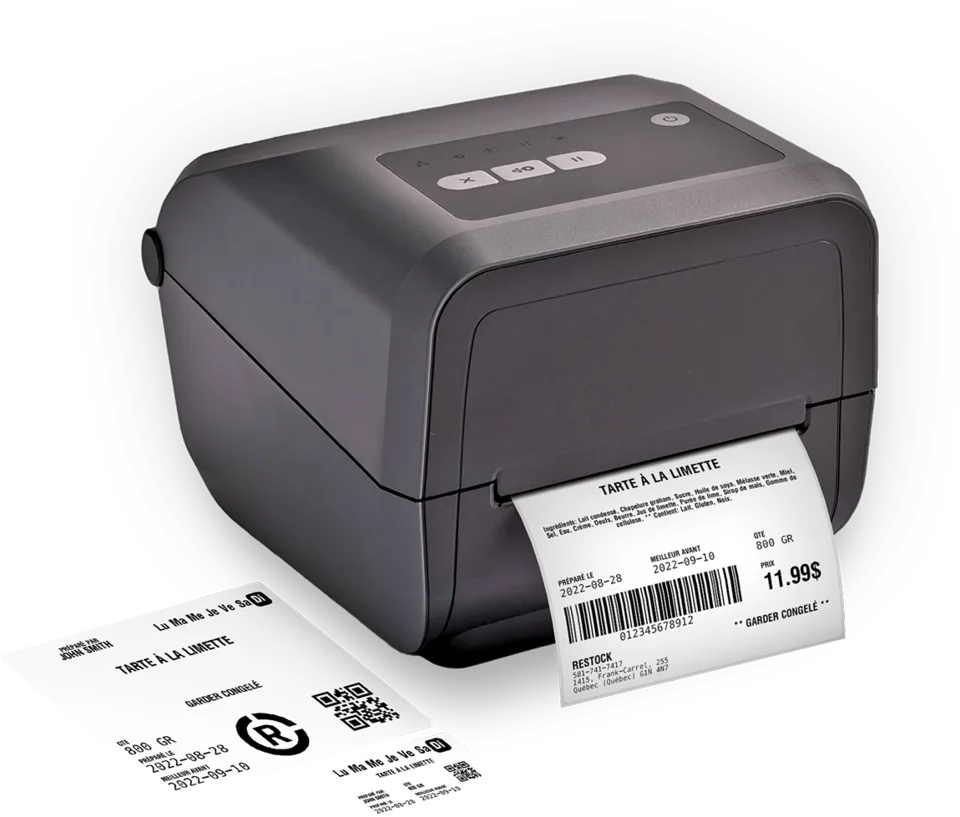
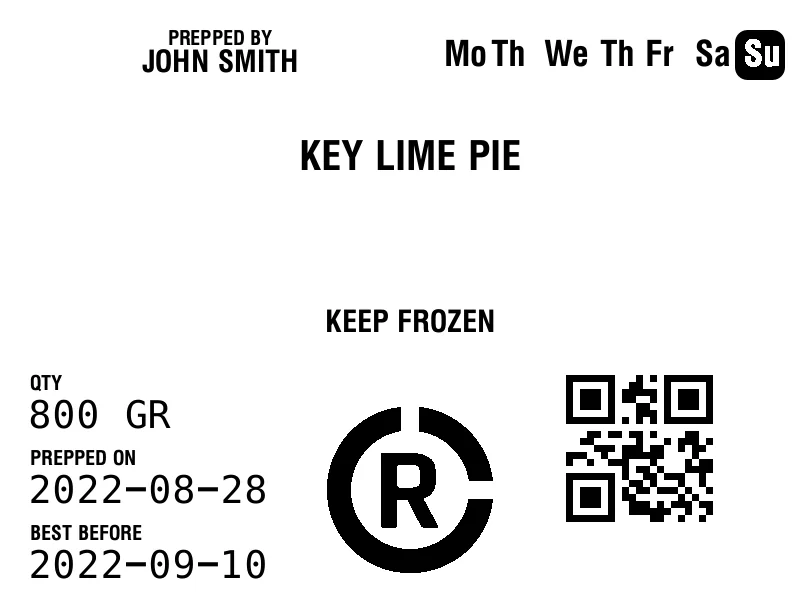
What the kitchen prepped gets counted, not guessed.
Your cook makes ten litres of demi and it vanishes from your numbers: the stock went out, nothing came back in. Print the prep label and that batch is recorded as production, so the walk-in adds up and every container on the shelf says what it is and when it was made.
Every location. One screen, so you see right away where your margins are slipping.
-
01
Food cost by site, side by side
Each site keeps its own count, its own suppliers and its own prices.
-
02
Send product between sites and see it land
Product moving between them that still adds up, including a commissary feeding the others.
-
03
One report for the group, not three
One screen that puts them beside each other: food cost by site, the same dish costed three ways.
Questions, answered.
How long does a count take?
Less each time. The first one is the slowest: you're placing products into sections as you go. After that, the walk is the walk: most rooms land in an evening, bar included if you weigh the opens.
What happens between two counts?
RESTOCK keeps a theoretical shelf moving with every sale and every delivery, so ordering and costing don't wait for you to count. The count is what trues it up.
Do I need the hardware?
No. RESTOCK works on its own. The scale, the sensors and the label printer exist because counting, temperature and prep all happen away from a desk, and operators kept asking us to solve those too.
I have several locations. Does that work?
That's where it pays the most. Each location keeps its own numbers, and you get them side by side, including transfers between them and a commissary feeding the others.
The rest of the system
Every part of RESTOCK reads from the same numbers.
Run the place. Not the paperwork.
Thirty minutes with one of our advisors.